Design
It began as a design
115
saved changes built the prototype, between 20 August and 14 September 2026
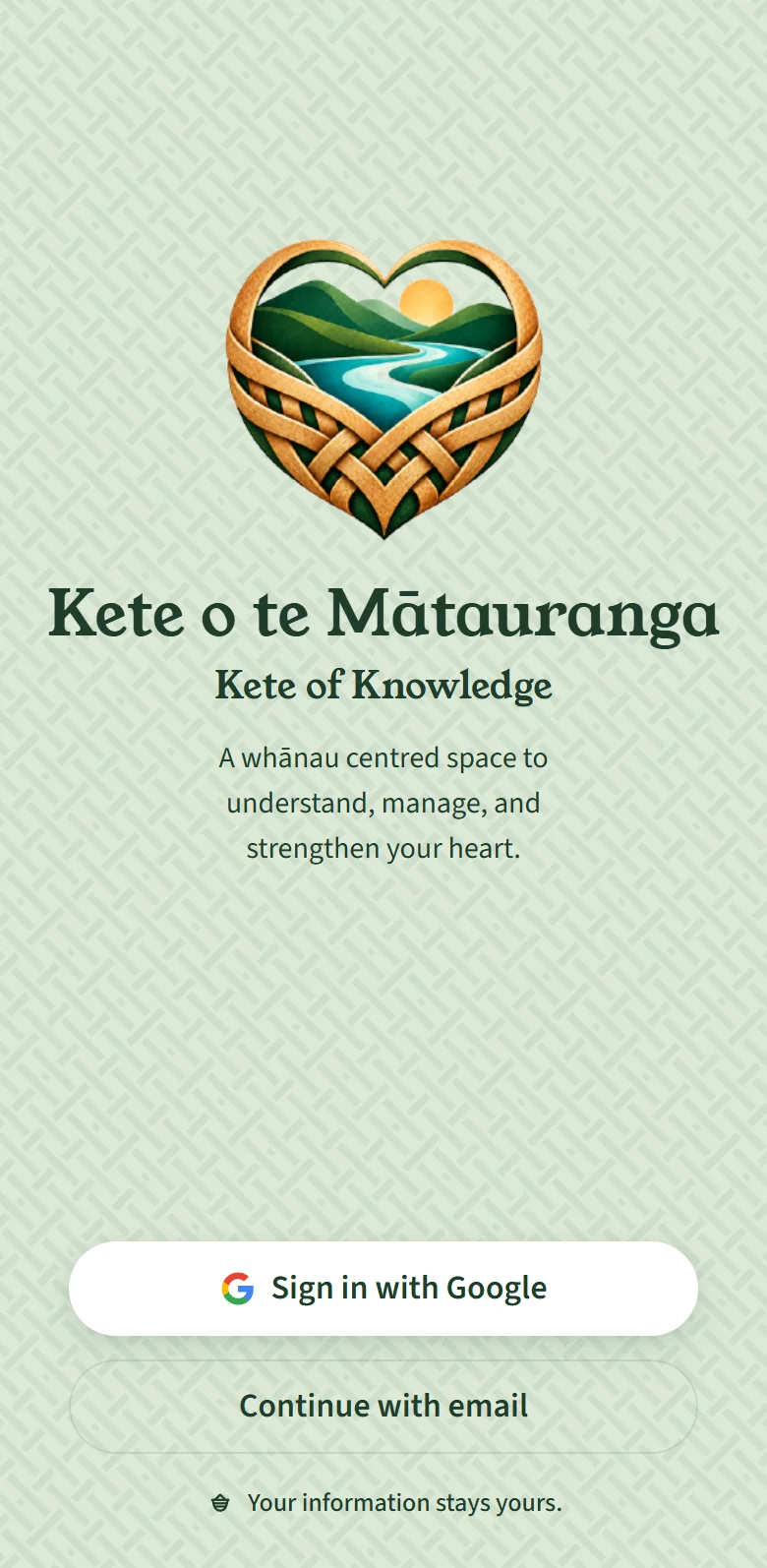
Before a line of the production app was written, the whole experience was designed and tested as a working prototype.
The Kete of Knowledge looks simple on a phone. This is the story of what sits underneath it.
Scroll to see how it was made
Design
115
saved changes built the prototype, between 20 August and 14 September 2026
Before a line of the production app was written, the whole experience was designed and tested as a working prototype.
Mockup
16
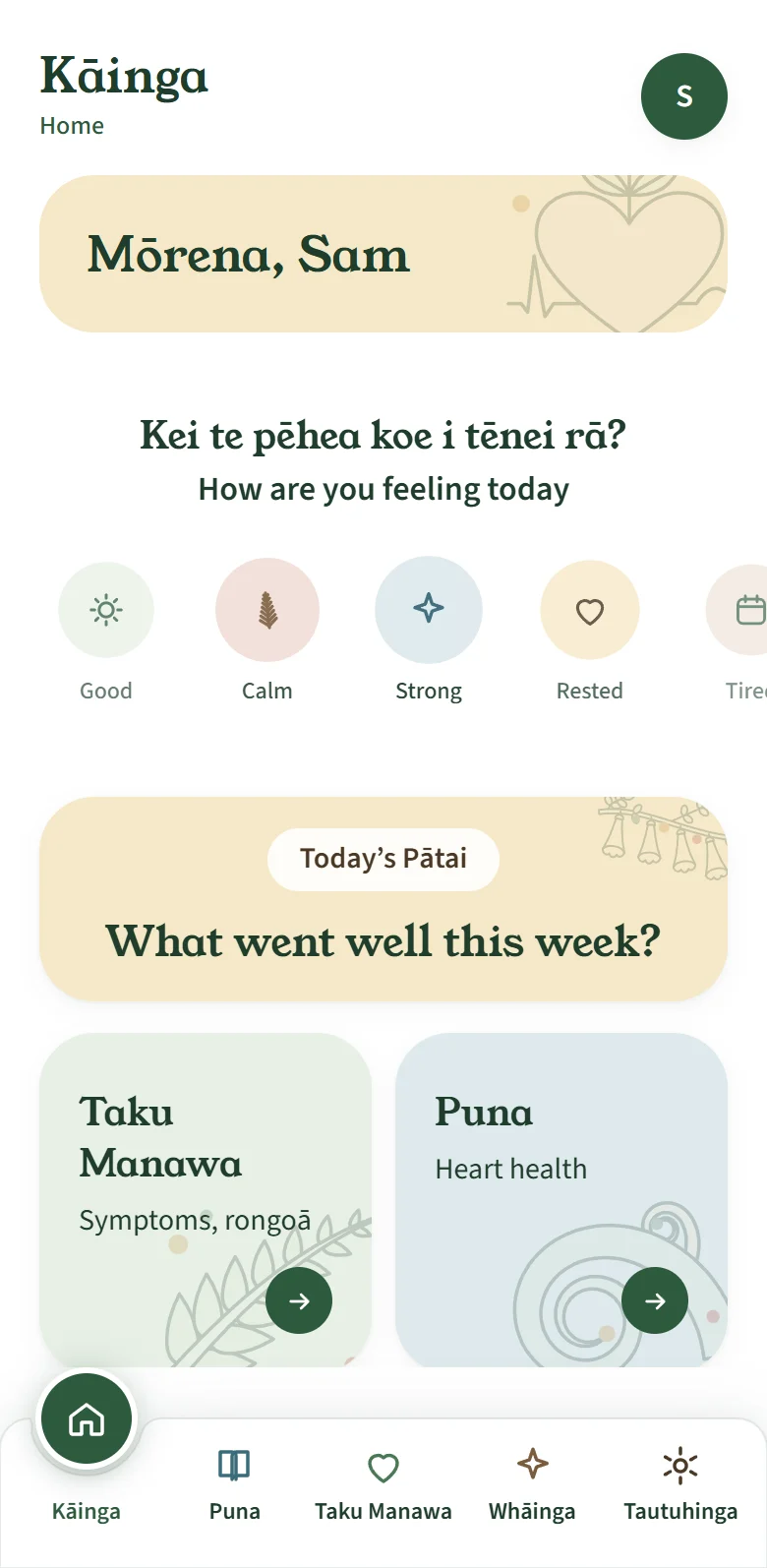
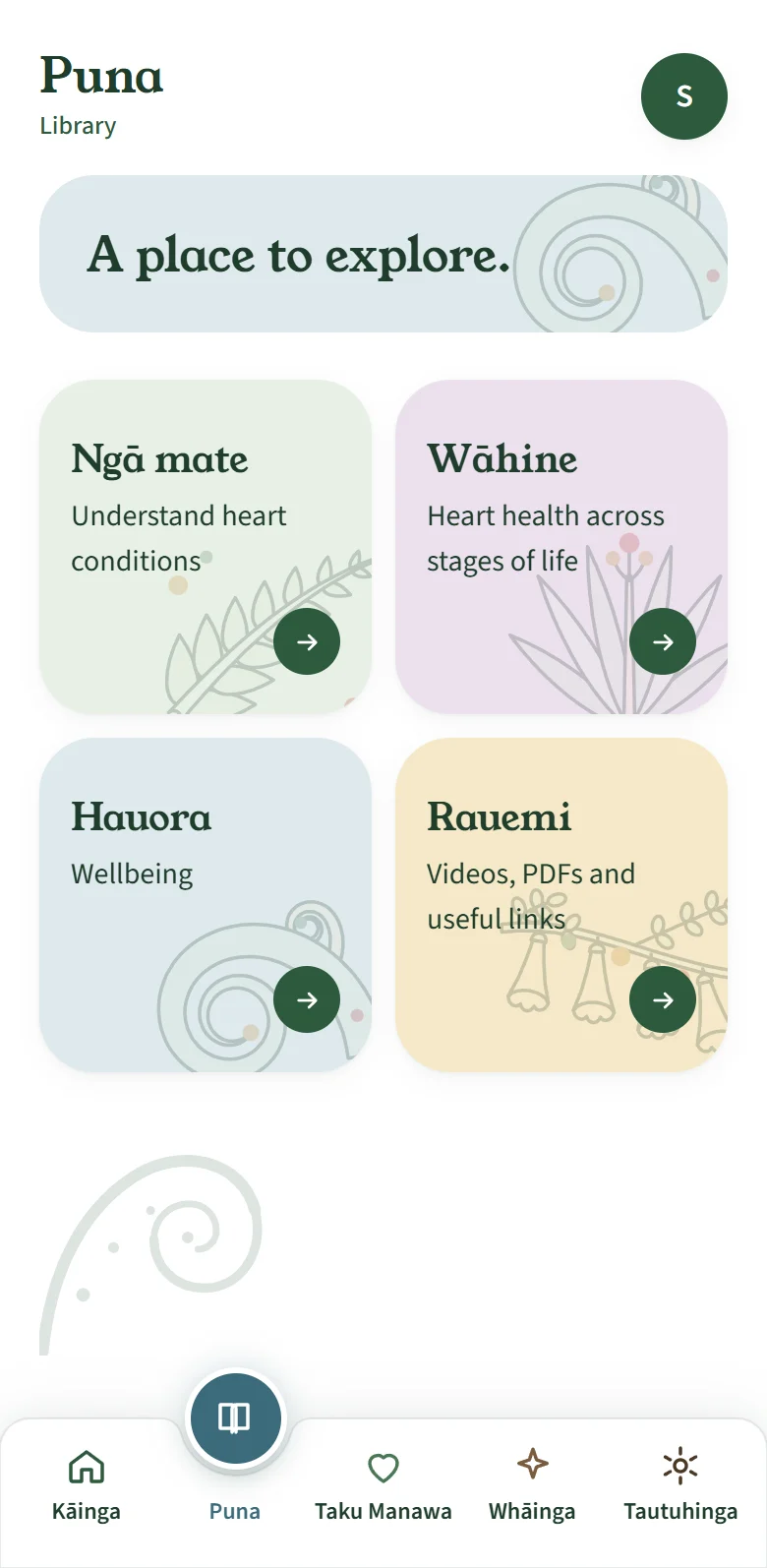
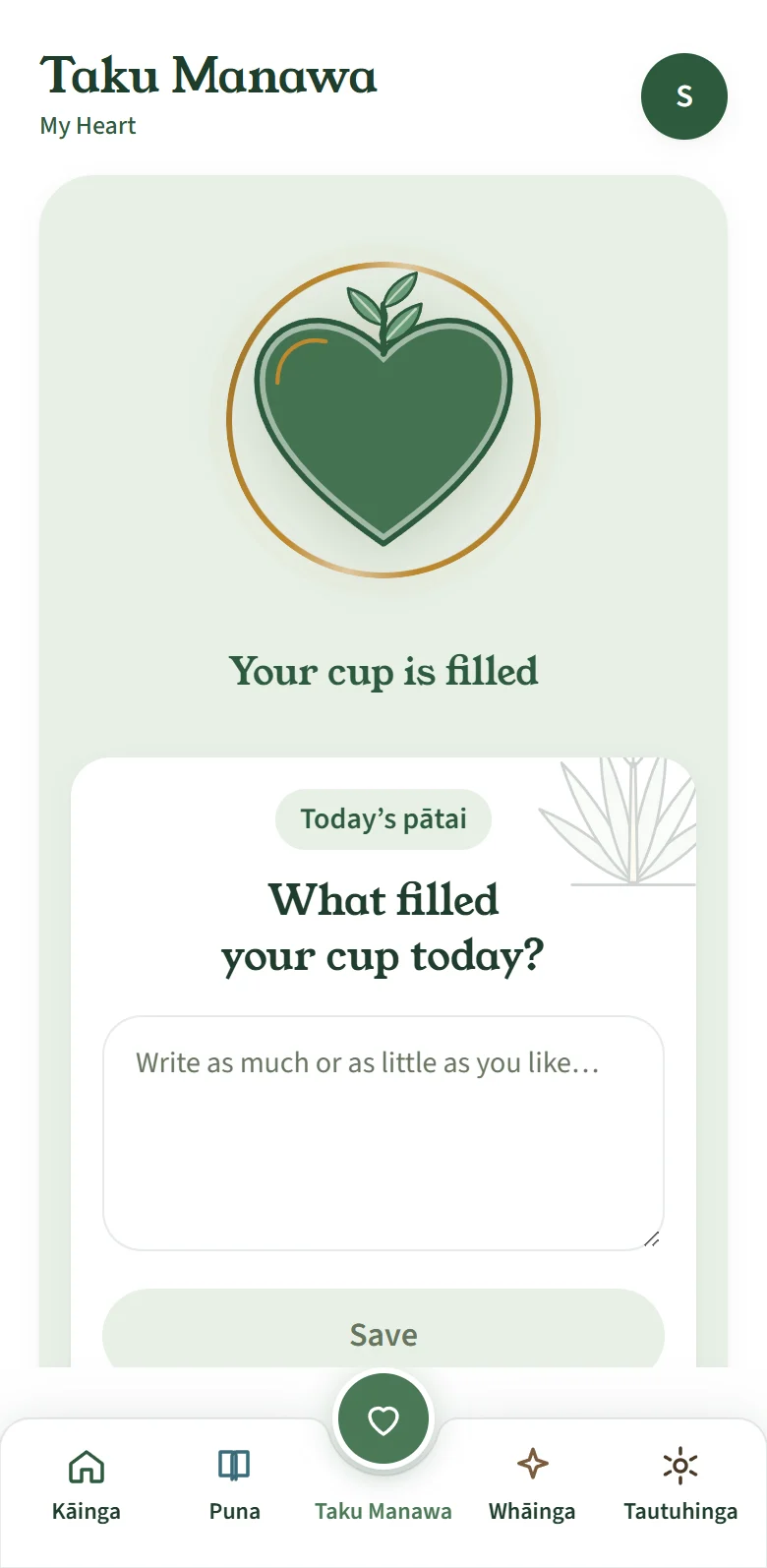
designed pages: the wireframes, the interactive mobile mockup, the structure map and the design explorations
That work set the navigation, the screens, the card and colour system and the Te Taiao look that the finished app still follows.
First build
The first plan was a New Zealand cloud host called Catalyst Cloud and a content system called Directus. Both were built, tested and then replaced when better options proved themselves.
53,092
lines were written into the Directus editing studio over six weeks, across 202 saved changes
Hosting
The app's servers and its backup database run in Amazon's Auckland region, so the backups of people's records are kept in New Zealand.
8
infrastructure blueprints describe every server, network and database, so the whole setup can be rebuilt the same way every time
Content
Sanity is the content system the Manawaora team uses to edit the app's words and pages.
123
pieces of published content are live in it, including 8 heart conditions, 94 trusted resources and 9 sets of screen words
Offline
A person's own records live on their phone and work without a signal. A New Zealand hosted backup lets a person restore their kete after a new or lost phone.
19
dedicated test files check offline use, storage, backup and restore
Audits
Every change runs through automated checks before it can reach anyone's phone.
5,049
automated checks passed on the final build at completion, with none failing. By 11 November that had grown to 5,414.
1 November 2026
11.6minutes
until the database was rebuilt and back online
7.2minutes
of changes were at risk, at most
Shipping
The first production release reached phones on 16 October.
22
successful production releases of the app by completion
Since completion
On 11 November, Add a card went live: editors can now add cards to a section on purpose, with a preview that follows the card.
3
how to videos, made from 13 short task clips, show the team how to edit content, manage user accounts and manage editors
Safeguards
14days
The database is backed up automatically and can be restored to a point in time within the last 14 days.
53
Days from the agreed start (14 September) to completion (6 November)
52
Days with work saved to the code
41
App screens
232
Reviewed change requests merged
202,201
Lines of working code at completion
93,735
Lines of automated tests at completion
Over 500 hours
have gone into bringing this to life.
The Directus studio, the Prismic trial, the Catalyst setup, and many first attempts that were replaced by better ones.